
A Comprehensive Guide to Human Erogenous Zones
SSMTOYS Editorial Team
Release Date: February 8, 2026
The human body is an intricate map of sensation, capable of experiencing pleasure in ways that go far beyond the obvious. Erogenous zones—those sensitive areas that can spark sexual arousal when touched—are a key part of intimate connection, self-discovery, and sexual fulfillment. While many people immediately think of the genitals, the truth is that pleasure points exist all over the body, from the scalp to the toes. These zones vary greatly from person to person, influenced by factors like nerve density, personal experiences, and even emotional context.
Understanding erogenous zones isn’t just about enhancing bedroom experiences; it’s about appreciating how our bodies respond to touch and building deeper intimacy with ourselves or partners. Research shows that stimulating these areas can release endorphins, increase blood flow, and activate brain regions associated with reward and pleasure. Yet, despite their importance, many people overlook lesser-known spots or feel unsure about how to explore them safely and effectively.
This guide draws on medical and scientific insights to provide a thorough, evidence-based overview. We’ll cover what erogenous zones are, how they work from a biological standpoint, a head-to-toe breakdown of common and surprising zones, differences between men and women, practical stimulation tips, and the essential role of communication. Whether you’re curious for personal reasons or looking to improve partnered experiences, this article aims to inform and empower with accurate, respectful information.
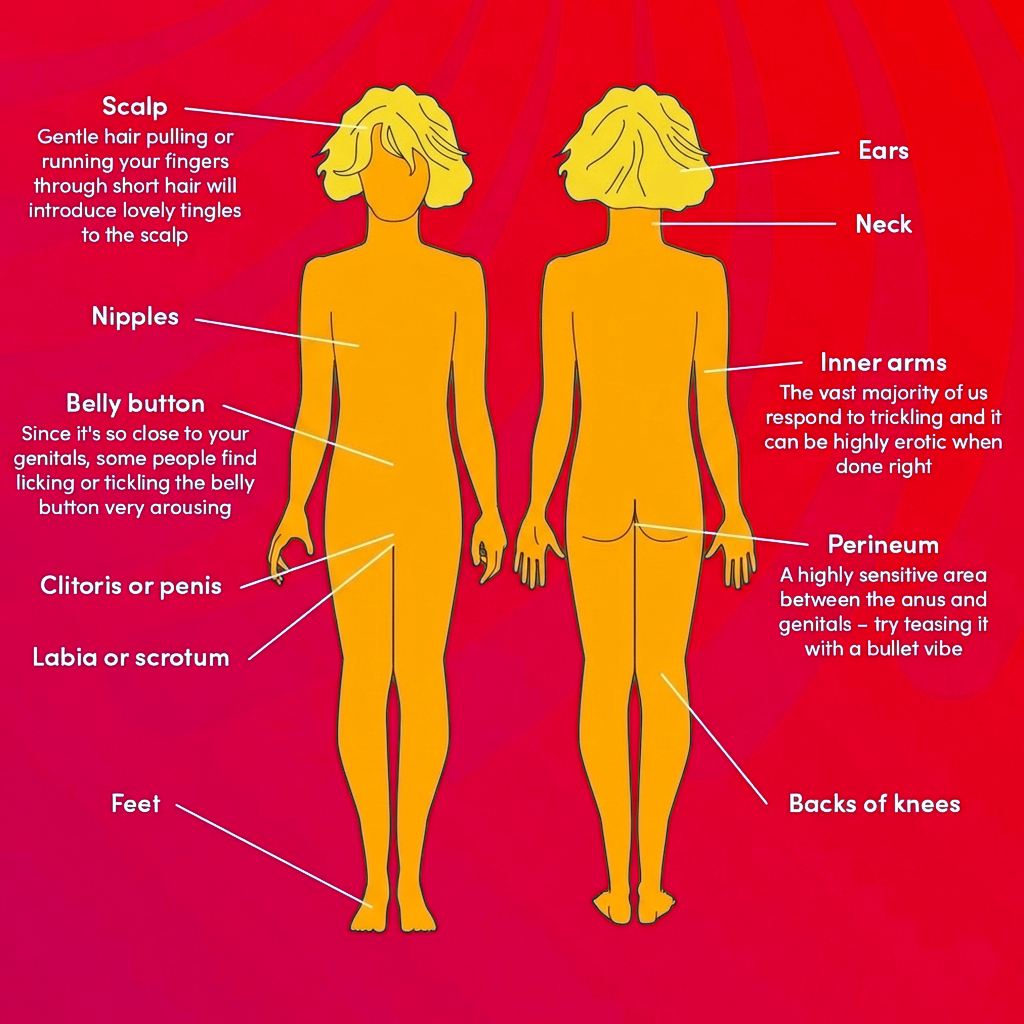
What Are Erogenous Zones?
At their core, erogenous zones are regions of the body with heightened sensitivity that, when stimulated, can produce sexual arousal or pleasure. The term comes from the Greek words “eros” (love) and “genous” (producing). These areas are packed with nerve endings that send signals to the brain, triggering responses like relaxation, tingling, or intense excitement.
Scientists classify erogenous zones in a few ways. Primary erogenous zones are typically the genitals and surrounding areas, such as the clitoris, penis, and anus, which are inherently wired for sexual response due to their high concentration of specialized nerve receptors. Secondary erogenous zones include non-genital areas like the lips, neck, nipples, and inner thighs—these become arousing through context, touch quality, or association with pleasure.
Some experts further distinguish specific zones (mucosal tissues like the lips or genitals with dense specialized nerves) from nonspecific ones (hairy skin areas like the neck or thighs that respond to general touch). Studies have mapped these zones across populations, finding remarkable consistency in high-arousal areas while emphasizing individual variation—no two bodies are exactly alike.
From a neuroscience perspective, touching erogenous zones activates the somatosensory cortex, the brain’s “body map.” Interestingly, genital areas are represented next to other zones like the feet in this map, which may explain why some people find foot stimulation intensely pleasurable. Multisensory research also reveals that visualizing or watching a partner touch these zones can elicit similar arousal as direct touch, highlighting an “erogenous mirror” effect where our brains map pleasure onto others’ bodies.
Importantly, erogenous zones aren’t fixed. Arousal level, mood, relationship dynamics, and even hormonal factors can amplify or diminish sensitivity. What feels electric one day might be neutral the next. This fluidity underscores why exploration and open dialogue are so valuable.
Erogenous Zones in the Head and Neck
The head and neck are rich in sensitive nerves and thin skin, making them prime territory for building anticipation.
Lips and Mouth
The lips are one of the most universally recognized erogenous zones. Packed with thousands of sensory receptors, they respond exquisitely to kissing, nibbling, or light tracing. The mouth’s mucosal tissue mirrors genital sensitivity, and deep kissing can trigger oxytocin release, fostering emotional bonding alongside physical arousal.
Ears
Ears, especially the lobes, are often underrated. The skin here is thin, and nerves connect directly to arousal pathways. Whispering, gentle blowing, licking, or nibbling can send shivers down the spine. Some people find ear play intensely ticklish at first, but with the right pressure, it transitions to pleasure.
Neck
The neck—particularly the sides, nape, and area just below the ears—is a classic hotspot. Light kisses, breaths, or fingernail trails here can cause full-body goosebumps. Vulnerability plays a role; exposing the neck signals trust, heightening emotional intensity.
Scalp and Hair
Many overlook the scalp, yet it’s dotted with nerve endings. Running fingers through hair, gentle tugging (if desired), or massaging the scalp can relax and arouse simultaneously. This zone often works best as foreplay, easing tension before moving elsewhere.
Eyes, Cheeks, and Nose
Subtler areas like closed eyelids (light kisses), cheeks (soft strokes), or even the nose (due to scent’s link to attraction) can contribute to overall sensuality, though they’re less intense for most.
Torso and Upper Body Erogenous Zones
Moving downward, the torso offers a mix of obvious and hidden pleasure points.
Nipples and Areolae
Nipples top many lists of erogenous zones. For both men and women, stimulation here activates brain areas similar to genital touch. Nerve pathways from nipples connect to the genitals, explaining why some achieve orgasm from nipple play alone. Techniques range from gentle circling to pinching or using ice—preferences vary widely.
Breasts and Chest
Beyond nipples, the entire breast area (or chest in men) can be sensitive. Massaging, kissing, or light scratching builds arousal gradually.
Abdomen and Navel
The lower stomach and belly button are close to pelvic nerves. Tracing circles around the navel or using the tongue here teases proximity to genitals without direct contact, heightening anticipation.
Lower Back and Sacrum
The small of the back, especially the sacrum (just above the tailbone), connects to pelvic nerves. Firm pressure, kisses, or grazing can feel deeply pleasurable and grounding.
Sides and Ribs
The sides of the torso are sensitive to light touch, often blending ticklish and arousing sensations.
Inner Arms, Armpits, and Wrists
Inner arms and armpits have thin, sensitive skin. Slow strokes or licks here can surprise with intensity. Wrists and palms, loaded with nerves, respond to caressing or even finger-sucking, evoking intimacy.
Lower Body and Limbs
Legs and feet hold surprising potential.
Inner Thighs
Inner thighs are a gateway zone—highly sensitive due to proximity to genitals and abundant nerves. Light fingertips moving inward while kissing elsewhere builds exquisite tension.
Buttocks
Buttocks respond to squeezing, spanking (consensually), or massaging. Nerves here link to pelvic pleasure.
Behind the Knees
This often-forgotten crease is delicate; light touches or kisses can tickle into arousal.
Feet and Toes
Feet have pressure points tied to whole-body sensation in reflexology traditions. Massaging, kissing, or sucking toes arouses some intensely, though others find it neutral.
Genital Erogenous Zones
Genitals are primary zones, but even here, specifics matter.
For People with Vulvas
The clitoris, with over 10,000 nerve endings, is the most sensitive spot for most. The glans (visible tip) and hood respond to circling, light pressure, or oral stimulation. Internal structures like the G-spot (anterior vaginal wall, 2-3 inches in) can swell with arousal, producing deep pleasure or ejaculation when stimulated with a “come hither” motion. The A-spot (deeper anterior fornix) and pubic mound also feature prominently. Labia, vaginal opening, and perineum vary in sensitivity.
For People with Penises
The glans (head) has around 4,000 nerve endings, making it ultra-responsive. The frenulum (underside connection) is often the most intense trigger. Foreskin (in uncircumcised individuals) glides for added sensation. Scrotum, testicles (handle gently), perineum, and prostate (accessed anally or via perineum pressure) can produce powerful orgasms—prostate stimulation sometimes called the “male G-spot.”
Shared Areas
The anus and perineum are highly erogenous for all genders due to pudendal nerve density. Anal play requires relaxation, lube, and consent.
Gender Differences and Individual Variation
Studies show overlap but some patterns: Women often rate nipples, neck, and inner thighs higher; men emphasize oral zones and genitals. However, a 2020 study on intersubjective maps found men and women have similar overall erogenous distributions, with differences modulated by viewing own vs. partner’s body. Sexual orientation, age, and experience also influence preferences. Crucially, variation trumps averages—what matters most is personal discovery.
Practical Tips for Stimulation and Exploration
Start slow: Use light touch, breath, or tools like feathers. Build intensity based on feedback. Combine zones—kissing the neck while stroking thighs multiplies sensation. Experiment solo first via masturbation to learn preferences. Use lube for comfort, especially genitally. Vary techniques: circling, flicking, pressure, temperature play (ice/warmth). Eye contact and verbal cues enhance connection.
The Essential Role of Consent and Communication
No guide is complete without emphasizing consent. Always discuss boundaries beforehand—enthusiastic yes means go, anything else means stop. Ask questions like “Does this feel good?” or “Harder or softer?” Safe words help in adventurous play. Respect that zones can change; what worked once may not always.
Erogenous zones remind us that pleasure is holistic, involving body, mind, and connection. By exploring thoughtfully, we deepen self-awareness and intimacy. Remember, there’s no “right” way—only what feels right for you.
For further reading, here are key sources that informed this guide:
Disclaimer: This article is for educational and entertainment purposes only and does not constitute medical or professional treatment advice. If you have health concerns, please consult a qualified physician or sexual health expert.