A Practical Guide to Body Piercing
SSMTOYS Editorial Team
Release Date: March 1, 2026
Reviewed by Dr. Donna I. Meltzer, MD
Dr. Donna I. Meltzer is an Associate Professor in the Department of Family Medicine at the State University of New York (SUNY) at Stony Brook School of Medicine, with over 25 years of clinical experience in primary care and dermatological concerns. Her work includes extensive research and patient counseling on body modifications, including piercings, focusing on complication prevention and management. For more on her credentials, visit her SUNY profile. Her publications on piercing-related health issues are available on PubMed.
In an era where personal expression through body art has become increasingly mainstream, many individuals turn to piercings as a way to adorn themselves with nose rings, earrings, nipple bars, navel jewelry, or even intimate accessories. This guide delves into the practical aspects of body piercing across various sites, outlining procedures, potential benefits and drawbacks, and essential considerations for those contemplating this form of self-expression. Whether you’re researching ear piercing options for beginners or weighing the nipple piercing risks and healing time, understanding the process involves evaluating your anatomy, lifestyle, and health history. Remember, while this article draws from established medical literature, it is not a substitute for professional medical advice—consult a healthcare provider before proceeding.
Body piercing, a practice dating back thousands of years in various cultures, involves creating an opening in the skin or cartilage to insert jewelry. Today, it’s often done for aesthetic reasons, but it carries inherent risks due to the breach in the skin barrier. Health data suggests that complications can occur in up to 20-30% of cases, ranging from minor irritations to more serious infections. Factors like the piercing location, aftercare adherence, and the piercer’s expertise play significant roles. In my clinical practice, I’ve encountered patients who thrive with well-managed piercings, but others who face unexpected challenges, emphasizing the need for informed choices.
From decades of treating piercing-related issues, I’ve observed that about 15-25% of patients seeking care for complications report inadequate initial hygiene or poor jewelry quality as contributing factors. Let’s explore the common piercing sites, starting with the ear, one of the most frequently modified areas.
Ear Piercings: From Lobes to Cartilage
Ear piercings are among the most accessible and versatile, accommodating everything from simple studs to intricate industrial bars. They can be done on the lobe, helix, tragus, or conch, each with unique considerations.
Lobe Piercings
The earlobe, being soft tissue without cartilage, is typically pierced using a hollow needle or, less ideally, a piercing gun. The procedure involves marking the site, cleaning with antiseptic, and swiftly inserting the needle followed by jewelry. Healing usually takes 6-8 weeks.
Advantages include quick recovery and low pain levels—many describe it as a brief pinch. It’s ideal for those new to body modifications, allowing experimentation with various earring styles without high commitment. For individuals exploring ear piercing aftercare for beginners, the lobe’s accessibility makes cleaning straightforward.
Drawbacks encompass potential allergic reactions to metals like nickel, leading to redness or itching. Infections can arise if aftercare is neglected, and in rare cases, keloid scars form, especially in those with a predisposition. From clinical encounters, roughly 10-20% of lobe piercing issues stem from improper gun use, which can cause tissue trauma.
Cartilage Piercings (Helix, Tragus, Conch)
These involve piercing the firmer upper ear cartilage using a needle, as guns are unsuitable and can shatter the tissue. The process mirrors lobe piercing but requires more precision due to the area’s density. Healing spans 3-12 months, depending on the exact spot.
Pros feature enhanced aesthetic options, like helix piercings for multiple hoops or bars, adding a layered look. They’re popular for those seeking subtle yet edgy adornments, and once healed, they tolerate jewelry changes well.
Cons include higher pain during the procedure and prolonged healing, with increased infection risk due to slower blood flow in cartilage. Swelling or “piercing bumps” (granulomas) are common, affecting up to 30% of cases in my observations. For those considering cartilage piercing pain levels and recovery tips, pressure from headphones or sleeping positions can exacerbate irritation.
In practice, I’ve advised patients with active lifestyles to opt for lobe over cartilage initially, as the latter demands more vigilant care to avoid complications like perichondritis, an inflammation of the surrounding tissue.
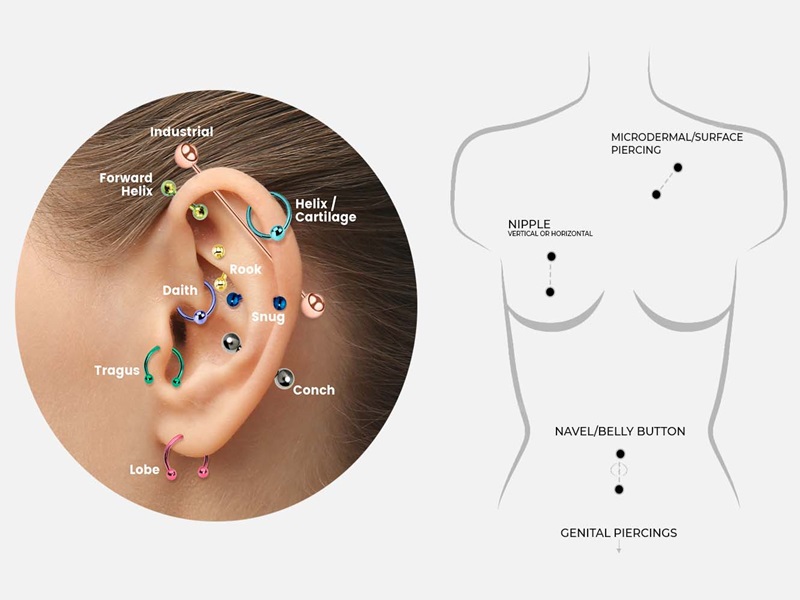
To visualize common ear piercing placements, refer to this diagram highlighting lobe, helix, and other spots:
Nose Piercings: Nostril and Septum
Nose piercings, often for rings or studs, require careful handling due to the area’s sensitivity and proximity to mucous membranes.
Nostril Piercings
Performed with a needle through the nostril’s side, after marking and sterilizing. Jewelry insertion follows immediately. Healing typically lasts 2-4 months.
Benefits include versatility for cultural or fashion statements, with options like small studs for discretion or hoops for boldness. Many find it enhances facial symmetry without overwhelming features.
Limitations involve swelling and tenderness initially, plus a higher chance of bumps or infections from nasal bacteria. Allergic reactions to jewelry can mimic cold symptoms. In clinic, about 20% of nostril issues relate to makeup or skincare products irritating the site.
Septum Piercings
The septum (cartilage between nostrils) is pierced horizontally with a needle, often using a receiving tube for stability. Healing takes 6-8 weeks.
Pros encompass the ability to flip jewelry up for concealment, making it suitable for professional settings. It’s less visible than nostril options yet allows for creative rings.
Drawbacks include intense initial pain from nerve-rich tissue and potential odor during healing from crusting. Infections can spread to sinuses if neglected. For septum piercing odor management during healing, saline rinses are crucial, as I’ve recommended to patients experiencing this common phase.
Clinically, nose piercings demand extra caution in allergy-prone individuals, where I’ve seen reactions double the healing time.
Nipple Piercings: Vertical or Horizontal
Nipple piercings, for bars or rings, are intimate and require anatomical assessment for suitability.
The procedure uses a needle through the nipple base, vertically or horizontally, after clamping for stability. Healing ranges 6-12 months.
Advantages may include heightened sensitivity for some, though this varies. Aesthetically, they pair well with body jewelry trends, offering privacy under clothing.
Disadvantages encompass significant pain and prolonged healing due to constant movement and friction from bras. Infections risk is elevated, potentially affecting breastfeeding later. From my experience, 25-35% of nipple piercing consultations involve concerns about scarring or rejection, where the body pushes out the jewelry.
For nipple piercing risks and healing time considerations, those with sensitive skin should note increased irritation from sweat or lotions.
Navel (Umbilical) Piercings
Typically through the upper navel rim with a needle, curving to follow anatomy. Healing: 6 months to 1 year.
Pros feature a focal point for midriff fashion, accommodating dangling jewelry. It’s relatively concealable for daily life.
Cons include high rejection rates from abdominal movement, especially in active individuals. Infections thrive in this warm, moist area. In practice, I’ve treated cases where tight clothing prolonged healing by 2-3 months.
For navel piercing rejection signs and prevention, monitoring for migration—jewelry shifting position—is key.
Genital Piercings: Various Intimate Sites
Genital piercings, like clitoral hood, labia, or Prince Albert (for assigned male at birth), are highly personal and demand specialized piercers.
Procedures vary: e.g., vertical hood piercing uses a needle through the hood tissue. Healing: 4-8 weeks for some, longer for others.
Benefits might involve enhanced sensation for certain people, though not universal. They offer private expression.
Drawbacks are substantial: intense pain, urinary complications, and elevated infection risks from bacteria-rich areas. Condom tears or partner discomfort can occur. Clinically, genital piercings account for 10-15% of severe complications I’ve seen, often requiring removal.
For genital piercing safety and aftercare guidelines, professional consultation is vital, especially for those with urinary tract histories.
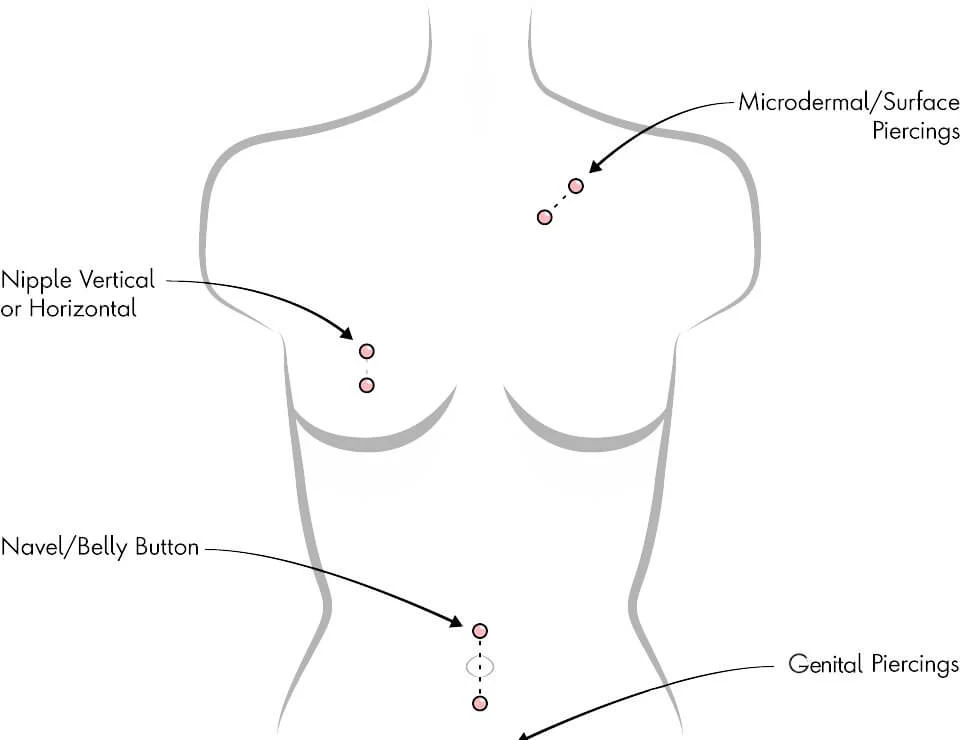
To overview piercing sites, this illustration labels ear, nose, nipple, navel, and genital areas:
General Considerations for Body Piercing
Beyond site-specific details, several overarching factors influence outcomes.
Choosing a Piercer and Studio
Select licensed professionals following health regulations. Look for autoclave sterilization, single-use needles, and clean environments. In my career, unregulated settings correlated with 40% higher infection rates among patients.
Jewelry Materials
Opt for implant-grade titanium, surgical steel, or gold to minimize allergies. Avoid nickel. Initial jewelry should be appropriately sized to accommodate swelling.
Aftercare Protocols
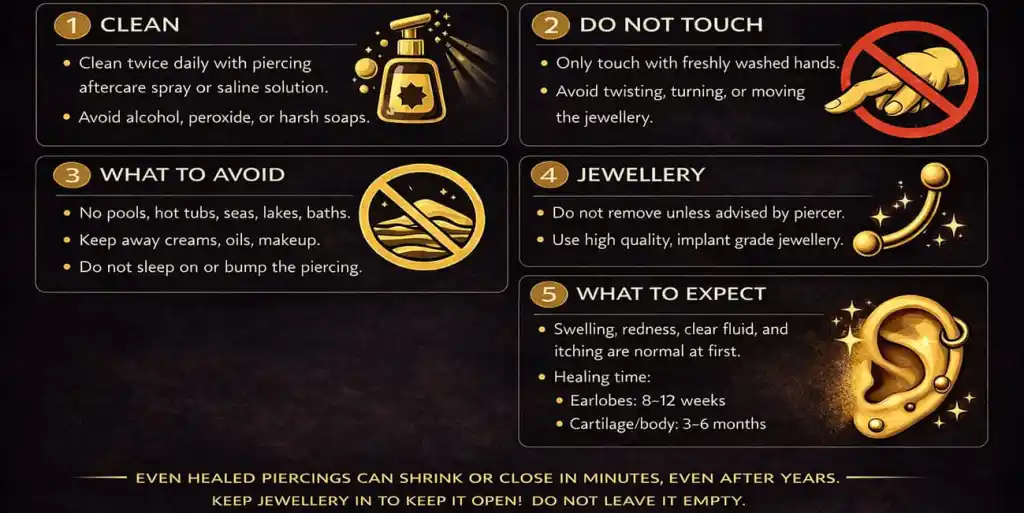
Clean twice daily with saline, avoid touching without washed hands, and steer clear of pools or ointments unless advised. This infographic outlines steps:
Healing Timelines and Monitoring
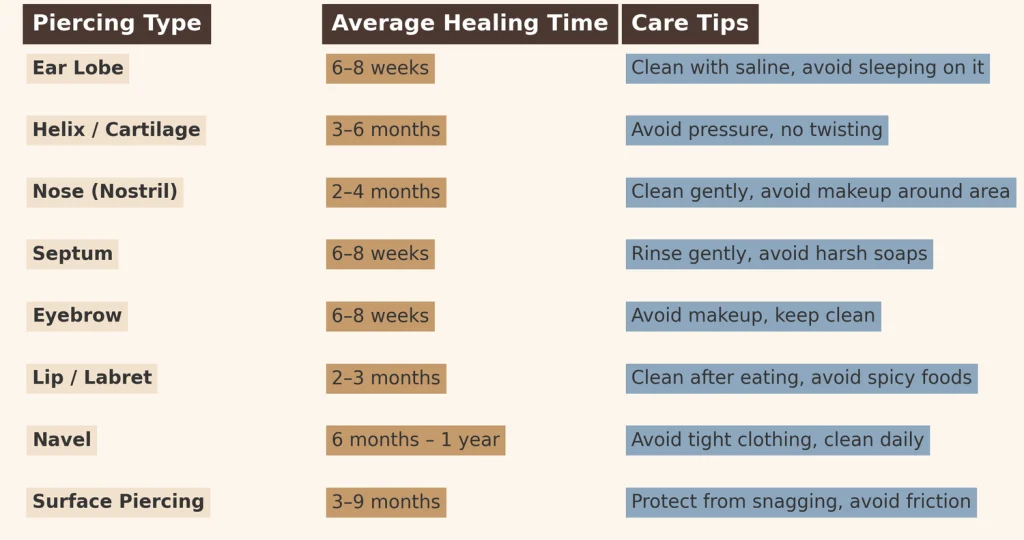
Timelines vary: lobes 6-8 weeks, cartilage up to a year. Watch for redness, pus, or fever—signs warranting medical attention. This chart details averages:
Health Risks and Contraindications
Infections (bacterial, viral like hepatitis) are primary concerns, with data showing 1.8 times higher HBV/HCV risk from piercings.Allergic dermatitis affects sensitive individuals.Those with heart conditions, diabetes, or immunosuppression should consult doctors, as risks amplify.
Scarring, embedding, or tearing from trauma are possible. Pregnant individuals or athletes may face added challenges.
Legal and Ethical Aspects
Minors often need parental consent; regulations vary by region. Ethical piercers screen for risks.
In summary, body piercing can be a fulfilling form of art, but prioritizing safety through research and professional care is essential.
Frequently Asked Questions (FAQs)
Based on common patient inquiries:
- How long does earlobe piercing take to heal completely?
Typically 6-8 weeks, but avoid changing jewelry prematurely to prevent closure. - What are signs of infection in a new nose piercing?
Persistent redness, swelling, or discharge—seek care if fever develops. - Is nipple piercing safe for breastfeeding later?
Possible, but scarring might affect milk ducts; discuss with a provider. - How to choose jewelry for navel piercing to avoid rejection?
Use curved barbells in implant-grade materials, sized for your anatomy. - Are genital piercings riskier than others?
Yes, due to bacteria and sensitivity; professional expertise is crucial.
References
- Body Piercing: Medical Concerns with Cutting-Edge Fashion – PMC
- Piercings: How to prevent complications – Mayo Clinic
- Complications of Body Piercing – AAFP
- From Ancient Traditions to Modern Medicine: A Review of the Evolution, Procedural Complications, and Surgical Challenges of Piercings – PMC
- Transmission of Hepatitis B and C Virus Infection Through Body Piercing: A Systematic Review and Meta-Analysis – PMC
Disclaimer: This article is for educational and entertainment purposes only and does not constitute medical or professional treatment advice. If you have health concerns, please consult a qualified physician or sexual health expert.